Can You Use Retinol and Hyaluronic Acid Together?
 Miranda
You've probably heard that retinol is the gold standard of anti-aging — but also that it can leave your skin dry, flaky, and irritated. So when someone suggests adding another product on top of it, the natural reaction is: won't that make things worse?
Here's the good news. Retinol and hyaluronic acid aren't just safe to use together — they're one of the best skincare pairings you can make. Dermatologists sometimes call this the "Power and Peace" combination, and for good reason.
What Does Retinol Actually Do?
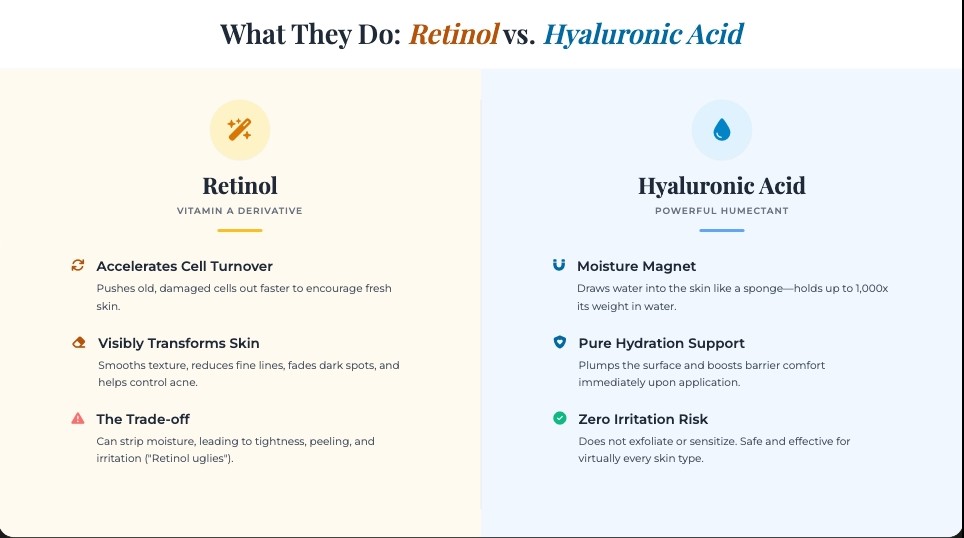
Retinol is a vitamin A derivative that speeds up your skin's cell turnover. It pushes old, damaged cells out faster and encourages fresh ones to take their place. Over time, this means:
- Smoother skin texture
- Reduced fine lines and wrinkles
- Faded dark spots and hyperpigmentation
- Better acne control
The trade-off? That accelerated turnover can strip moisture from your skin. Tightness, peeling, and flaking are common — especially when you're just starting out. This is where hyaluronic acid comes in.
What Does Hyaluronic Acid Do?
Hyaluronic acid (HA) is a humectant, meaning it draws water into your skin like a sponge. A single molecule of HA can hold up to 1,000 times its weight in water. It's naturally present in your skin already, but applying it topically gives your moisture levels a serious boost.
Unlike retinol, hyaluronic acid has a very low risk of irritation. It doesn't exfoliate, it doesn't increase sensitivity, and it works on virtually every skin type. It's pure hydration support.
Why They Work So Well Together
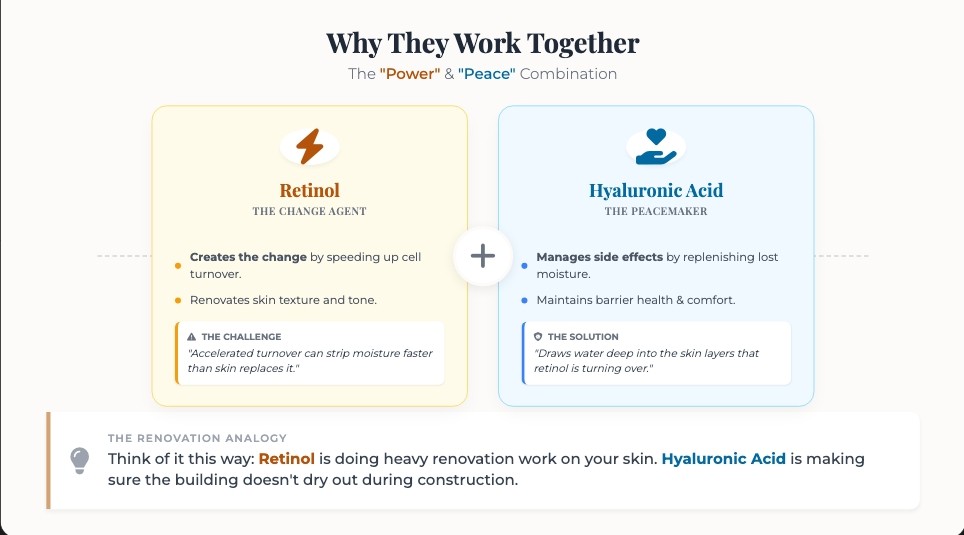
The reason this pairing is so effective comes down to balance. Retinol creates the change; hyaluronic acid manages the side effects.
When retinol accelerates cell turnover, your skin can lose moisture faster than it can replace it. That dehydration is what causes the peeling, tightness, and irritation that make people quit retinol too early.
Hyaluronic acid counteracts this by:
- Drawing moisture into the skin layers that retinol is turning over
- Maintaining your skin barrier health so irritation stays manageable
- Reducing the dryness and flaking that come with retinoid adjustment
Think of it this way: retinol is doing heavy renovation work on your skin. Hyaluronic acid is making sure the building doesn't dry out during construction.
— Check your routine —
Does your skincare routine work together?
Find ingredient conflicts, optimal application order, and personalized recommendations.
Check My RoutineHow to Layer Retinol and Hyaluronic Acid
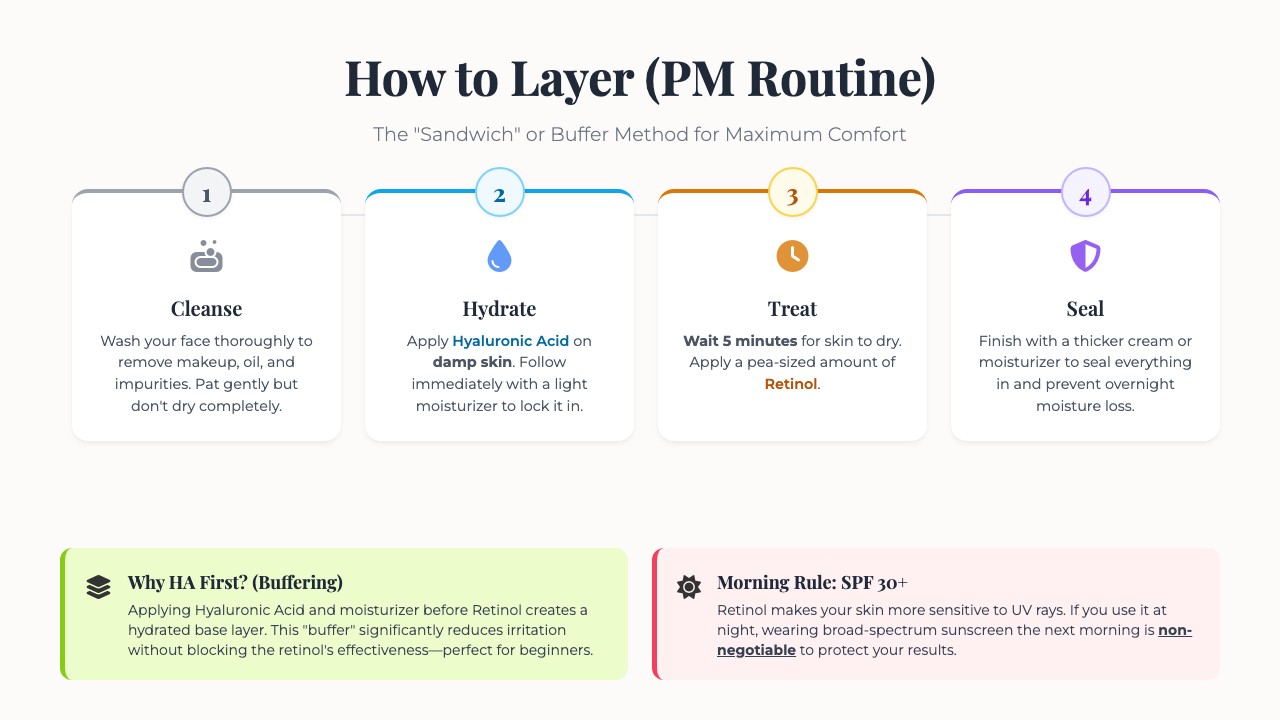
The order matters. A popular approach — especially if you're new to retinol or have sensitive skin — is to apply HA first as a buffer. Here's the step-by-step for your PM routine:
- Cleanse your face as usual
- Apply hyaluronic acid on slightly damp skin — HA works best when there's some moisture to draw from, so apply it shortly after cleansing. Always follow with a moisturizer to lock hydration in
- Wait about 5 minutes, then apply your retinol
- Finish with a moisturizer or cream to seal everything in
Why HA first works well: Applying hyaluronic acid before retinol creates a hydrated base layer. This can actually help reduce the irritation from retinol, especially if you're new to it. Some people call this "buffering."
That said, applying retinol first and HA afterward is also a valid option — particularly if your skin is already well-adjusted to retinol and you want maximum active penetration. The best order depends on your skin type and tolerance level.
A note on timing: Most dermatologists recommend using retinol at night, since it can increase photosensitivity. If you do use it in the evening, make sure to wear SPF 30+ the next morning — this is non-negotiable for protecting your results and your skin.
Who Is This Combination Best For?
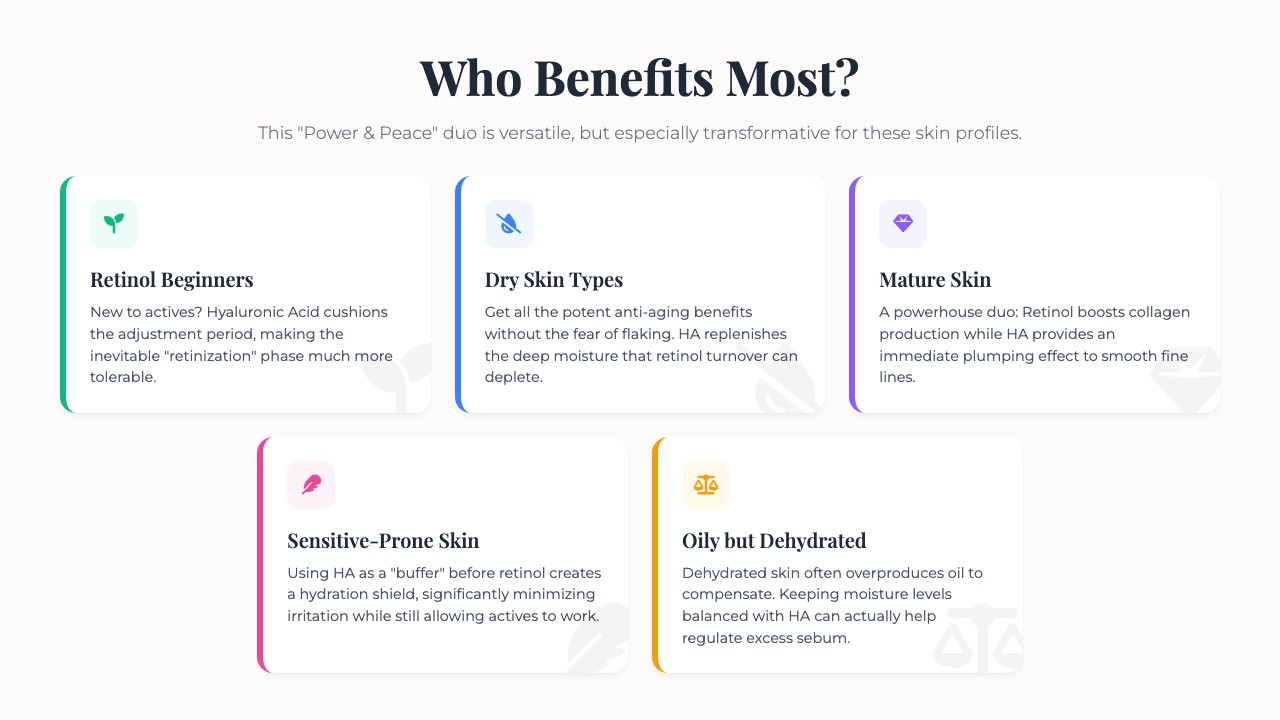
This pairing works for almost everyone, but it's especially beneficial for:
- Retinol beginners — HA cushions the adjustment period and makes side effects more tolerable
- Dry skin types — you get the anti-aging benefits without the moisture loss
- Mature skin — retinol's collagen-boosting + HA's plumping effect is a powerful anti-aging duo
- Sensitive-prone skin — the hydration buffer helps minimize irritation
If you have oily skin, don't skip the HA. Dehydrated skin (even oily skin) actually produces more oil to compensate. Keeping moisture levels balanced can help regulate oil production too.
Common Mistakes to Avoid
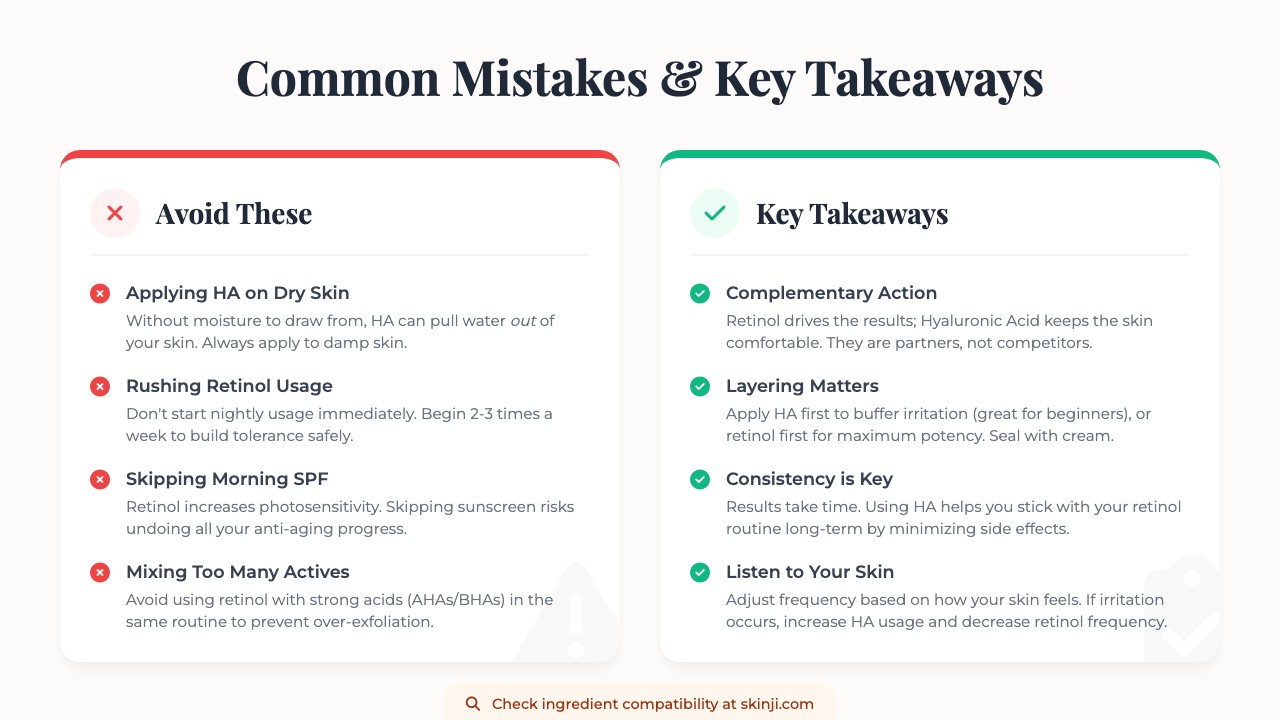
Applying HA on completely dry skin without a moisturizer. Hyaluronic acid pulls moisture from wherever it can find it. In a dry environment without a follow-up occlusive, it can actually pull water out of your skin instead of into it. For best results, apply on slightly damp skin and always seal with a moisturizer afterward.
Using retinol every night from day one. Start with 2-3 times per week and gradually increase. Your skin needs time to build tolerance, and even with HA's support, jumping in too fast will cause unnecessary irritation.
Skipping sunscreen the next morning. Retinol increases photosensitivity. If you're using retinol at night but not wearing SPF 30+ during the day, you're undoing your results and risking sun damage.
Mixing retinol with other strong actives in the same routine. Retinol + AHA/BHA in the same session is a recipe for over-exfoliation. Keep your actives separated — use retinol on some nights and acids on others.
The Bottom Line
Retinol and hyaluronic acid aren't competing — they're complementary. Retinol does the heavy lifting for anti-aging, acne, and texture. Hyaluronic acid makes sure your skin stays hydrated and comfortable throughout the process.
If you've been avoiding retinol because of dryness fears, pairing it with HA might be exactly what makes it work for you. And if you're already using retinol but struggling with flaking, adding a hyaluronic acid step could be the missing piece.
Not sure which ingredients in your routine play well together? Check your products at skinji.com — it analyzes your ingredient combinations so you don't have to guess.
— Check your routine —
Does your skincare routine work together?
Find ingredient conflicts, optimal application order, and personalized recommendations.
Check My Routine