Vitamin C and Niacinamide Together: Myth vs Reality
 Miranda
If you've ever googled "can I use vitamin C with niacinamide," you've probably seen conflicting answers. Some say they cancel each other out. Others say they're the perfect pairing.
So which is it? Let's look at the science.
The Myth
The old advice was clear: never mix vitamin C and niacinamide. The reasoning? A study from the 1960s showed that combining ascorbic acid (vitamin C) with niacinamide could produce nicotinic acid, which causes flushing and redness.
This study was cited everywhere — beauty blogs, skincare forums, even some dermatologists repeated it.
The problem? That study used extreme conditions (high heat, long exposure times) that don't exist in normal skincare use. The reaction they observed simply doesn't happen when you layer two products on your face at room temperature.

The Reality
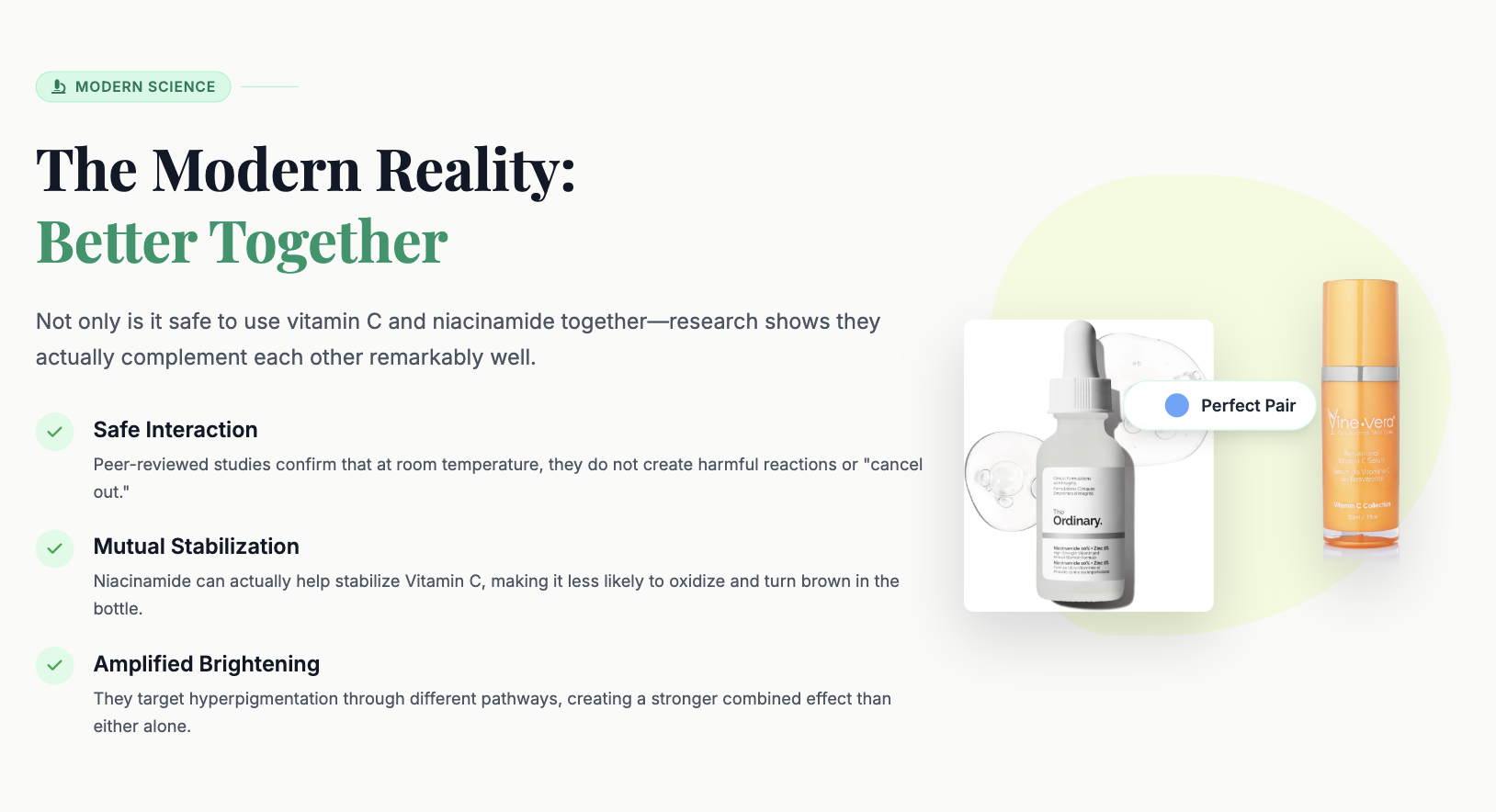
Modern research tells a very different story. Not only is it safe to use vitamin C and niacinamide together — they actually complement each other remarkably well.
Here's what the current evidence shows:
They Target Different (Complementary) Things
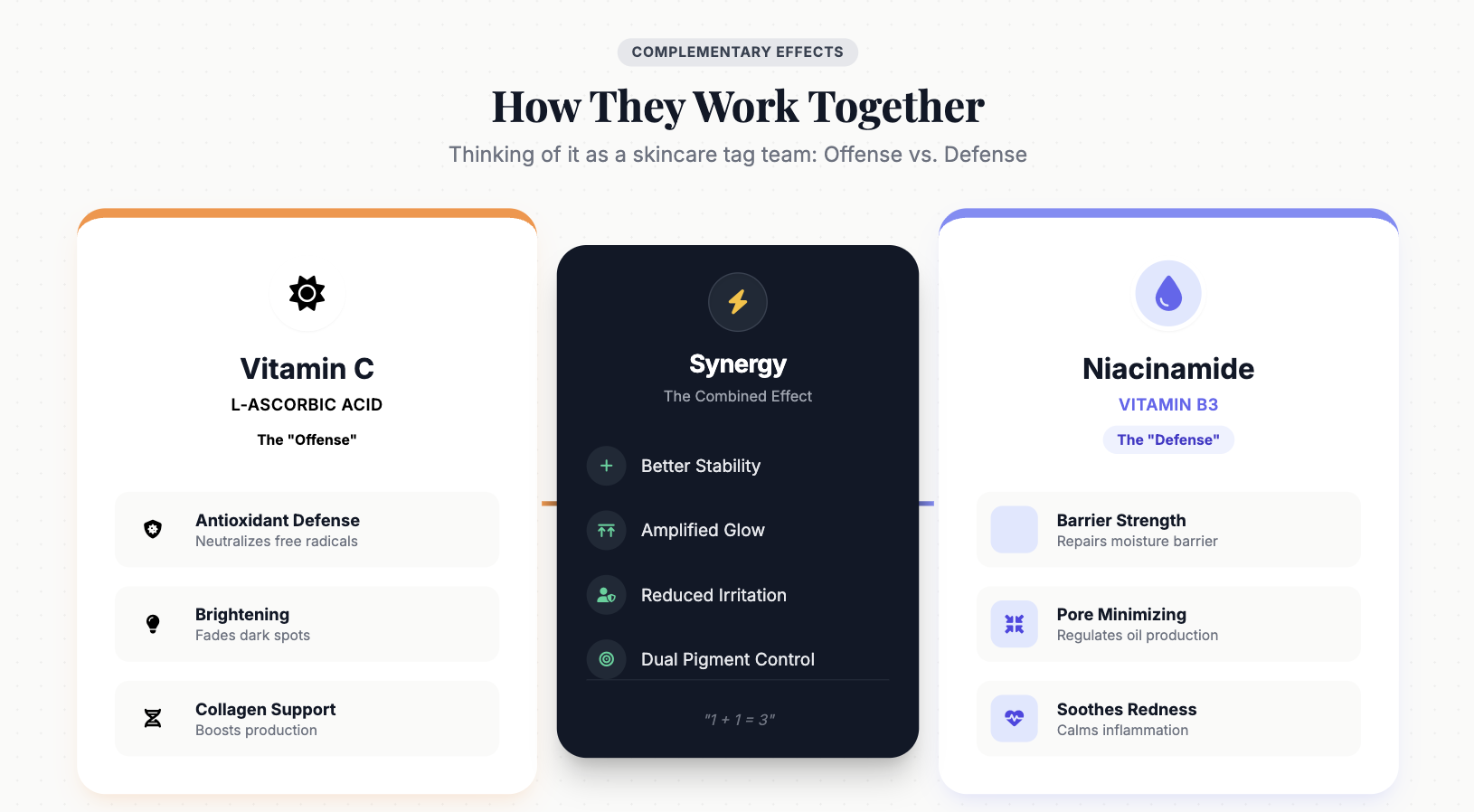
- Vitamin C (L-Ascorbic Acid): Antioxidant protection, brightening, collagen synthesis, UV damage repair
- Niacinamide (Vitamin B3): Barrier strengthening, pore minimizing, oil regulation, redness reduction
Together, they cover more ground than either ingredient alone. Think of it as a tag team: vitamin C handles offense (fighting free radicals) while niacinamide handles defense (repairing the barrier).
They Enhance Each Other
- Niacinamide helps stabilize vitamin C, making it less likely to oxidize (turn brown) in your routine
- Vitamin C's brightening effect is amplified by niacinamide's ability to inhibit melanin transfer
- Both reduce hyperpigmentation, but through different pathways — so the combined effect is stronger than either alone
No Harmful Interaction at Normal Conditions
Multiple peer-reviewed studies have confirmed that the 1960s concern doesn't apply to modern skincare formulations. The small amount of nicotinic acid that could theoretically form is negligible and harmless.
— Check your routine —
Does your skincare routine work together?
Find ingredient conflicts, optimal application order, and personalized recommendations.
Check My RoutineHow to Layer Them
You have several options, and they're all fine:
Option 1: Same Routine, Different Products
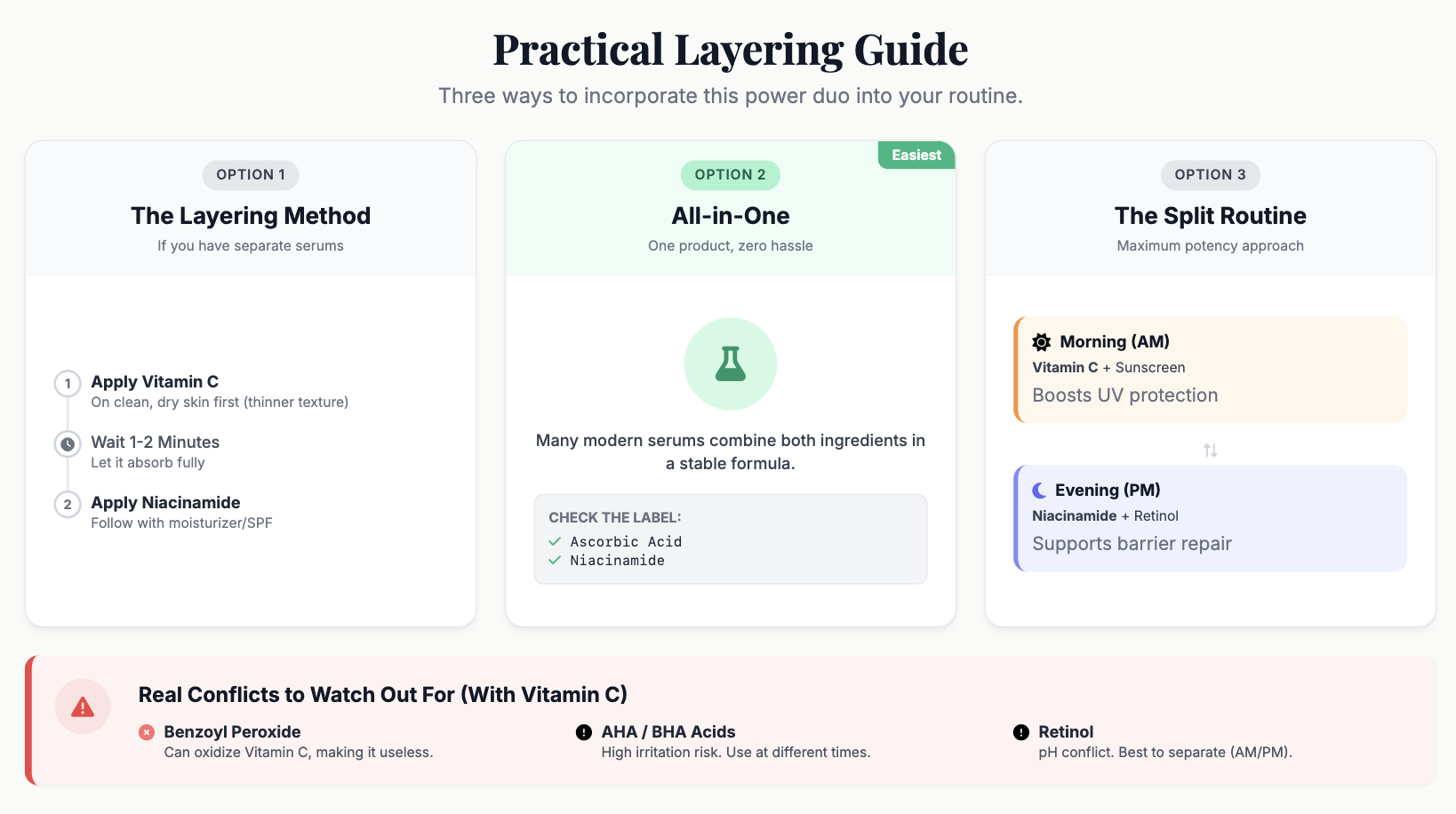
Apply vitamin C serum first (it's typically thinner and needs direct skin contact), wait a minute, then apply your niacinamide product.
- Step 1: Vitamin C serum
- Wait 1-2 minutes
- Step 2: Niacinamide serum or moisturizer
Option 2: One Product With Both
Many modern serums contain both vitamin C and niacinamide in the same formula. These are formulated to be stable together and eliminate any layering concerns.
Look for products that list both "Ascorbic Acid" (or a vitamin C derivative) and "Niacinamide" on the ingredients list.
Option 3: Split AM/PM
If you prefer to keep things simple:
- AM: Vitamin C serum (pairs great with sunscreen for enhanced UV protection)
- PM: Niacinamide serum (pairs well with retinol for nighttime repair)
This approach works perfectly fine, but it's not necessary — it's just a matter of preference.
What About Vitamin C and Other Ingredients?
While vitamin C and niacinamide are perfectly fine together, vitamin C does have some real conflicts to watch out for:
Vitamin C + AHA/BHA: Use With Caution
Both are acidic. Layering them can drop your skin's pH too low, causing stinging and irritation. If you want both, use them at different times of day.
Vitamin C + Benzoyl Peroxide: Avoid
Benzoyl peroxide can oxidize vitamin C, rendering it useless. Keep these in separate routines entirely.
Vitamin C + Retinol: Better Separated
While not dangerous, vitamin C (at low pH) and retinol (at higher pH) work optimally at different pH levels. Using them in the same routine can reduce the effectiveness of both. Morning vitamin C, evening retinol is the classic pairing.
Choosing the Right Vitamin C
Not all vitamin C is created equal. The form matters:
- L-Ascorbic Acid: Most potent, most researched, but also the most unstable. Look for concentrations between 10-20%. Needs to be in a dark bottle and used within a few months of opening.
- Ascorbyl Glucoside: More stable, gentler, but less potent. Good for sensitive skin.
- Ethyl Ascorbic Acid: Good balance of stability and efficacy.
- Magnesium Ascorbyl Phosphate: Water-soluble, gentle, good for acne-prone skin.
If you're new to vitamin C, start with a lower concentration (10%) and work your way up.
The Bottom Line
The vitamin C + niacinamide myth is officially busted. Not only can you use them together — you probably should. They're one of the best ingredient pairings in skincare for brighter, more even, healthier-looking skin.
The real ingredient conflicts to worry about are less obvious. Wondering what's actually clashing in your routine?
— Check your routine —
Does your skincare routine work together?
Find ingredient conflicts, optimal application order, and personalized recommendations.
Check My Routine